Equatorial Guinea is an off-the-beaten path destination. Because of this, it has amazing natural beauty. As such an unusual place to visit, you might be wondering what the top things to see in Equatorial Guinea are.
In this guide, I summarize the main places and things to see in Equatorial Guinea, having spent two months there myself!
Equatorial Guinea is a place perfect for adventure. Of course, your trip here may require some extra planning such as visa and internal travel documents. Before visiting, you should review whether you need a visa and Equatorial Guinea’s current travel regulations.
Equatorial Guinea: One of the Least Visited Countries on Earth
Equatorial Guinea is one of the least visited countries in the world. For many travelers around the world, the country imposes a very strict visa requirement that largely excludes tourism from anywhere. Getting the exact number of annual visitors to Equatorial Guinea can be tricky given the country’s limited state capacity and lack of transparency, however some estimates put it at less than 1,000 visitors a year.
Because tourism is so low, the country’s natural beauty is astounding. It is a lush volcanic landscape with black sand beaches and unique tropical wildlife. It is safe to say Equatorial Guinea is one of the most untouched and memorable countries I’ve ever visited.
So, what are the best places to visit in Equatorial Guinea?
1. Bioko Island
Starting off, most people first touchdown in EG by arriving to Bioko Island. Bioko Island lies in the Gulf of Guinea off Central Africa’s coast. Bioko is full of biodiversity. It is home to endangered primates, sea turtles, and unique bird species. In fact, there are a few highly preserved areas and scientific research organizations monitoring the biodiversity.
The island’s capital, Malabo, can be found on Bioko Island. It serves as the country’s political and economic hub.
Pristine beaches, crater lakes, and mountains make Bioko a great first stop in your journey through Equatorial Guinea.


2. Malabo
If you’re flying to Equatorial Guinea, you’ll probably first pass through Malabo. Malabo, the capital of Equatorial Guinea, is located on Bioko Island.
The city has some Spanish colonial architecture (reflecting its past as a Spanish colony), but most buildings are somewhat modern and characteristic of construction in this area of Africa.
As the country’s economic and political center, Malabo hosts many government offices, oil companies (such as Marathon), embassies, and international businesses. One of the most popular things to see is Catedral de Santa Isabel.
Despite its economic growth from oil revenues, Malabo faces challenges like infrastructure gaps and social inequality. Many construction projects are half-complete, but most of the major roads are quite good. This helps keep the oil companies productive and the government happy (peruse the Obiang family and the history of corruption).


3. Lago Biao and Moka Volcano
Lago Biao, a cool crater lake, is nestled within the island’s volcanic highlands. Surrounded by dense rainforest – and when I say dense, I mean you better have a machete type of dense – a trek to Lago Biao is usually rewarding. I say usually because it is sometimes packed in with clouds and you may not actually get to see the lake at the top of the Moka (Moca) Volcano.
Hiking here offers a chance to see wildlife like bright blue birds, pangolins, primates, and other animals. I crossed paths with a hunter who was carrying a small deer-like animal down on his back.
You’ll want good boots and a poncho or proper rain jacket. It is muddy and wet! I was honestly not properly prepared. Going off the image below – you can do it in sneakers, but I wouldn’t recommend it. I slipped once and got very muddy.
You may need a guide and a permit to visit. I did in 2018. Check with the internal tourism authorities.

4. Pico Basile
Pico Basile is the highest peak in Equatorial Guinea. It rises to 9,879 feet (3,011 meters). Found on Bioko, this dormant volcano is part of the Cameroon volcanic line and dominates the island’s landscape. That is, when you can see it. It is often lost in the clouds.
A road leads near the summit, providing amazing views of Malabo, the Atlantic Ocean, and even Mount Cameroon (yes, you can see Cameroon from Bioko!) on clear days. There is even an active Catholic Church all the way at the top, as well as some research centers. I attended a mass here, although I am not Catholic and that was a great experience.
It is worth the drive up if it is clear! Conditions can change quickly. Keep an eye on the weather.


5. Ureca Beach
Now for my FAVORITE place in Equatorial Guinea. Ureca (Ureka) Beach, located on the southern coast of Bioko Island, is a remote black sand beach. It is absolutely one of the best landmarks in Equatorial Guinea and well worth the journey.
It is surrounded by thick rainforests and dramatic waterfalls. It is one of the island’s most pristine beaches.
Ureca is famous as a nesting site for endangered sea turtles, particularly during the breeding season from October to March. Due to its isolation, Ureca remains an African hidden gem.
Ureca beach is one of the wettest places on earth, as measured by rainfall. It lives up to this reputation. I abandoned all my electronics in the car when it became evident that it would be near constant rain and mist. Plus, to explore the area, there is a lot of swimming and river fording.
The day spent exploring Ureca was one of the most impressive and memorable days in my life due to its uniqueness and untouched beauty. The group I was with were the only people on the entire coastline.
If you want to feel like the only people on Earth, run off to Ureca beach and spend the day exploring the many interconnected small bays, lagoons, and waterfalls.


6. Luba
The second-largest town on Bioko and one of the largest cities in Equatorial Guinea is Luba. It lies along the island’s west coast. Historically a key port for trade, it remains important for fishing and commerce.
Luba is surrounded by jungle and nearby beaches – most notably Arena Blanca (White Sand), known for its seasonal butterfly migrations.
The town also serves as a gateway to Ureca Beach. At the gateway turn to Ureca, there is also a market where you can see local game (birds, pangolins, primates, conches, and more). A short visit to Luba is sufficient in my opinion. You can see it in a few hours.


7. Bata
Bata, the largest city in Equatorial Guinea, is the primary economic and transportation hub on the mainland. If you plan to see more than Bioko Island and head over to the mainland, you’ll probably go through Bata. It is located along the Atlantic coast and was even once the country’s capital,
The city has infrastructure (and the infrastructure problems) similar to Malabo and lively nightlife (though I didn’t stay overnight and can’t attest to this). It has a nice coastal promenade: Malecón de Bata,
Visiting Bata is a means-to-an-end in my opinion. On my way back to Malabo from Bata, a regional flight operated by Ceiba Airlines canceled a flight after many delays. As there are very few flights for locals, this was a significant issue and I found myself in riot in security. An actual riot. It was probably one of the more dangerous and scary experiences in my life. It is unlikely you’ll experience an airport riot, but if I can give any advice it would be that you should not fly Ceiba.
8. Oyala
Oyala, also known as Ciudad de la Paz, is the planned capital of Equatorial Guinea, located in the country’s interior. Designed to replace Malabo as the capital, Oyala aims to be an upgraded admin and productive economic hub. They’ve been saying this for many years now though.
The city features government buildings, luxury hotels, and universities. Though still under construction, Oyala (supposedly) symbolizes the country’s ambitions for modernization and growth. The success of this mission however is dubious, as many projects are incomplete, and corruption is rampant. Also, because it is a planned city, there aren’t actually many people living there, giving an ominous ghost town feeling.
Where to Stay in Oyala
One of the craziest places to stay on the continent is the Grand Hotel Djibloho. This is a full service five-star hotel that is maintained and staffed, but largely uncrowded due to its remote location. I stayed here for a several days and it was one of the most bizaree, but memorable experiences of my life. There are very few travelers, yet there is an immacualte hotel in the middle of the jungle.
Equatorial Guinea’s government aims to move their political capital here to Oyala (City of Peace), and as such the hotel is meant to host elites that visit EG. Yet, the price comes in at mid-range for most American travelers.
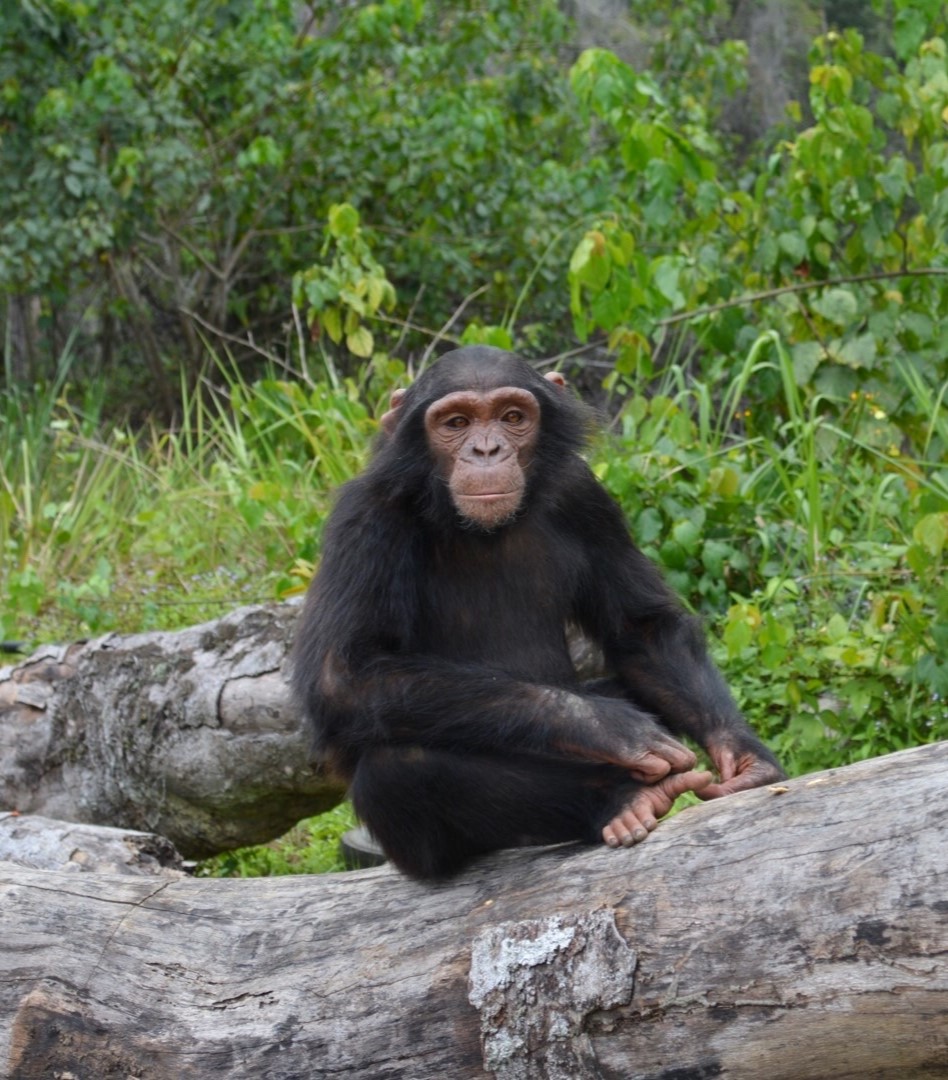
In addition to being a full service hotel, there are chimpanzees on site. They are usually in enclosures, but are also let out to roam around. This was another once in a lifetime experience – I was here for work and yet during a break in the afternoon I had chimpanzees literally climbing on me. If you haven’t caught on yet, EG leaves visitors with unforgettable experiences – some amazing, some weird, some bad.


9. Annobon Island
Finally, the remotest of the remote. Annobón Island, located in the Atlantic Ocean is a volcanic island. The island has a tropical climate and a small local population that primarily speaks the unique Annobonese Creole. This language is influenced by Portuguese and Bantu languages.
Annobón remains largely untouched by modern development, offering a great escape for visitors bold enough to make the far journey to one of Africa’s hidden gems. I never did make it here myself, nor did any of my colleagues, but many people wished they had. There is no airport, and you can only get there by boat. The boats are not that frequent, so it is quite a commitment to get here.
Heading to Equatorial Guinea?
In conclusion, a visit to Equatorial Guinea is worth it. It is a crazy, off-the-beaten path place with lots to see. It is unlike pretty much anywhere else in the world. Because part of it is an island, and the other small part is on the mainland, there are distinct characteristics in different parts of the country.
Equatorial Guinea is unfortunately undermined by corruption fueled by the oil the elites can capitalize on. It is largely closed to tourism for most people in the world, but nationals from the United States, can usually obtain tourist visas (or do not need one at all – check in advance because it changes frequently).
From major cities in Equatorial Guinea to amazing natural wonders, the country has lots to see and explore. There are many unique places in Equatorial Guinea. Bioko Island is perhaps the best place to visit, with the journey to Ureca Beach worth the effort.
Follow on Instagram

This site contains affiliate links that send a small referral commission to me when you book. This supports the writing of helpful guides on this blog. They incur no additional cost to you.

Leave a Reply to TaniaCancel reply