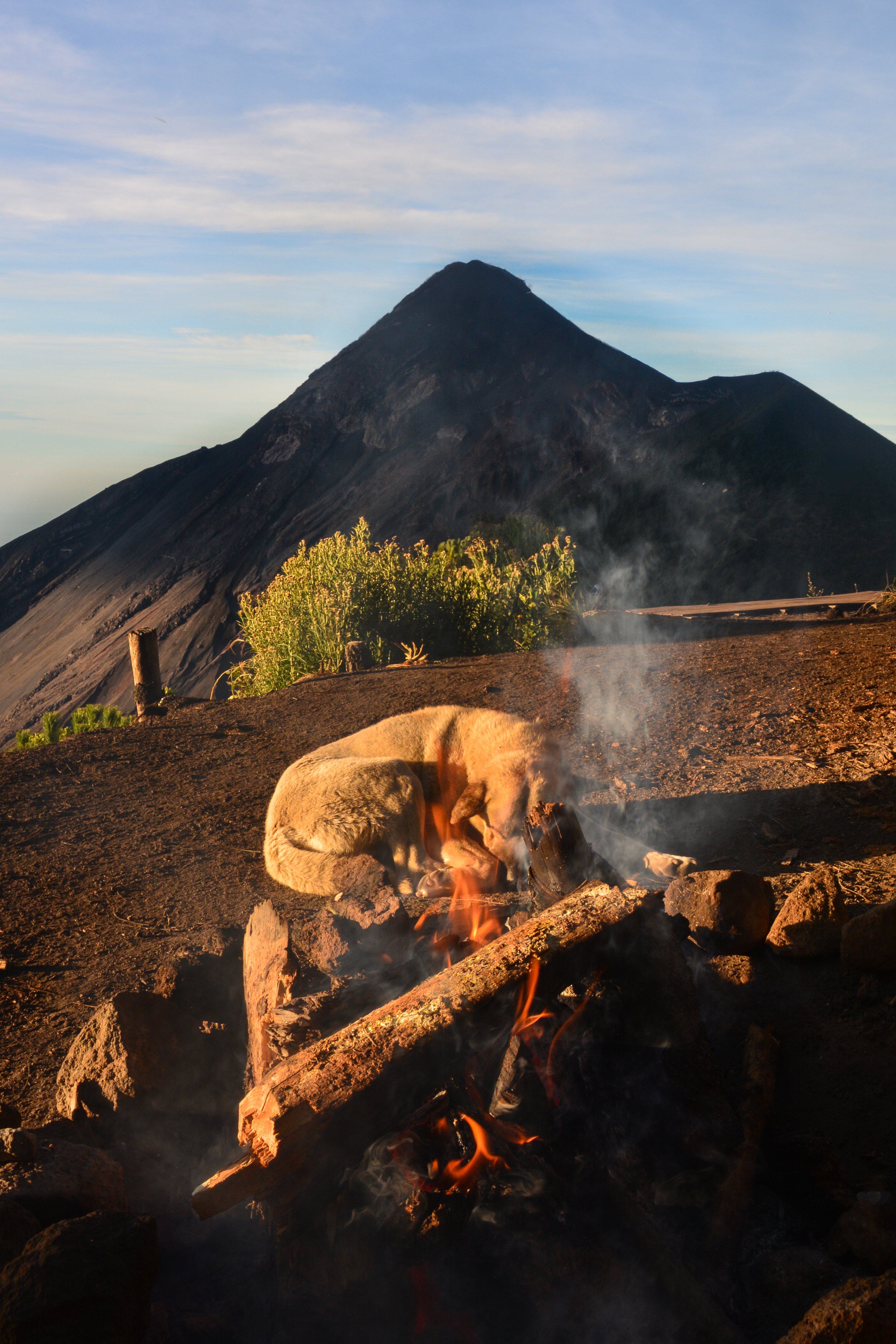
Acatenango is a bucket list hike for many adventurers as it is a hike to an active volcano and located at a high elevation. Many people come to Guatemala just to do this hike. Whether you are in Guatemala for a long weekend, a month, or are putting together a one-week itinerary, the eruptions of Acatenango are a must see.
Where is Acatenango?
Acatenango is a stratovolcano located in Guatemala, Central America. It is part of the Central American Volcanic Arc and is situated close to the city of Antigua, Guatemala, approximately 31 miles (50 kilometers) west of Guatemala City, the capital of Guatemala.
Acatenango is well-known for its hiking options, offering amazing views of nearby volcanoes, including Volcán de Fuego, a very active volcano in the region.
This Guatemala volcano hike is one of the most popular treks in Central America.
Good to Know for Guatemala
Currency: Quetzal
Capital City: Guatemala City
Languages: Spanish, K’iche’ (Mayan)
Bordering Countries: Mexico, Belize, Honduras, El Salvador
Best Time to Hike Acatenango
As one of the best things to do in Central America, I would try to do this hike any chance you get rather than waiting for the perfect time to go. That said, there are some weather timing considerations you may want to think about.
The best time to go to Acatenango is generally November to April. The Acatenango and Fuego hike are best when rainfall is the lowest, which is when views tend to be the best. You have the best odds of getting a great view between November and April. In fact, the absolute best views are between January and February, but this will be when it is coldest on the mountain.
The Acatenango trek can of course be done anytime of the year. Outside of the November-April range however you are more likely to have clouds and rain. May through October is the rainy reason in Guatemala.
Getting There
First, you’ll likely need to fly into Guatemala through Aurora International Airport. Popular airlines to reach this airport are Volaris and Avianca. Both a somewhat budget airlines. With both airlines, you usually have to pay for carry-on baggage and they typically do not offer a free drink or snack service during the flight. In my experience throughout Latin America with these airlines, there is no at-seat screen entertainment.
Then, you’ll need to get from Guatemala City to Antigua. This takes about an hour and follows a well maintained and frequently trafficked route. You can hire a transfer, rent a car, or ask a taxi to take you. I luckily had a friend in town to pick me up and take me to Antigua.
I recommend getting to Antigua at least one day prior to do the hike. Things can go wrong on the road (break downs, roadblocks, construction detours, etc.) or you may experience altitude sickness. Getting there in advance gives you at least one full night of rest before the difficult hike.
After settling into Antigua, you’ll likely attend the pre-departure meeting the night before the hike. Most organized hike groups offer this, but it is optional. See more below about choosing an operator. After booking your group, you just have to show up and do the climb. The guides will help with the majority of the logistics from there.
How to Hike Acatenango Volcano
In most cases, you’ll probably want to join an organized guided hike to base camp and Fuego. The two leading tour groups are OX Expeditions and Wicho and Charlie’s. They are comparable in price and amenities. Both offer cabins, meals, gear rentals, and numerous guides for your group. I went with OX Expeditions and definitely recommend them.
The Climb
Acatenango Volcano’s summit elevation is at 13,046 feet (3,976 meters). The Acatenango Volcano hike to base camp and back is 8.44 miles (13.6 kilometers), split between two days and one overnight. This distance does not include the optional portions to Fuego or the summit. Those additional hikes are both about 2 miles round trip, but are steep and in even more difficult terrain.
The Cost
The Acatenango Volcano overnight hike costs anywhere between $50-120 depending on the quality of the guide and amenities. I paid $90 for Acatenango and $40 for Fuego when I went in 2023. In addition, there is a small entrance fee near base camp for entering the national park. As of 2023, it was 100 quetzales ($12.50 USD). It is cash only.


Rough Schedule of the Hike
Hiking Acatenango in Guatemala will require two days and one overnight.
Day 1
- 6:00 am: Meet with your guide and confirm you have the right gear. You can rent additional coats, gloves, a headlamp, or other supplies. Save room in your bag to pack some of the food items for the group. Everyone has to help carry some food up.
- 7:00 am: Load your bags and self into the van and head for breakfast at a restaurant in Antigua. Meet other people in your group and fuel up for a big day.
- 8:30 am: Unload from the van and rent trekking sticks from a family business at the base of the trail.
- 9:00 am: Start the hike up. There will be a few stops on the way for bathrooms and snacks. Some water and food items are available for purchase if desired at the early rest stops.
- 12:00 pm: Informal lunch break. Sandwiches are provided by guided tours in most cases. This is the time to eat it.
- 2:00 pm: Reach base camp. Give or take the time depending on your pace. You get time to rest once you get to camp and settle into your cabin. Cabins and groups are assigned at base camp.
- 7:00 pm: Dinner and red wine served. Dinner is usually a hot veggie pasta. Hot chocolate and marshmallows around a campfire.
- 7:00 pm alternative: Leave for the Fuego hike. Dinner afterwards.
- 10:00 pm: Fuego hikers return and have dinner.
Day 2
- 3:00 am: Time depends on sunrise hour at the time of year. Your guide knocks on your cabin door to wake you for the optional summit hike to Acatenango to watch the sunrise from the peak. This hike takes you up to 13,046 feet (3,976 meters), an additional 1,400 feet (426 meters) in elevation. There is an optional foot race at the summit around the rim. Some tour groups like OX will refund your entire purchase if you beat the record time.
- 7:00 am: Breakfast of bagels and toast with a variety of spreads like peanut butter, avocado, and Nutella. Coffee and tea served.
- 8:00 am: Start the descent from base camp. There will be a few breaks on the way down to regroup and check in for bathroom breaks or snacks.
- 12:00 pm: You reach the bottom and get back into the van to drive you back to Antigua.
Is the Acatenango Volcano Hike Difficult?
Yes. Acatenango is a difficult climb for even those in excellent physical health. That said, it is possible to do the two-day trek with an average fitness level. I do not recommend the hike to those at below average fitness.

Can you climb Acatenango without a guide?
Yes, but I don’t recommend it for a few reasons. The first is that you can find very affordable guides for even small groups. Second, people have died from hypothermia on this mountain. Between extremely low temperatures, high wind, low visibility, and steep terrain, this trail can be quite dangerous at certain times. I would only do this hike alone if I was an extremely experienced mountaineer and backpacker.
Gear
Hiking Acatenango requires careful preparation and the right gear to ensure your safety and comfort during the challenging trek. Here’s a list of important gear to consider bringing to the Acatenango Volcano in Guatemala:
- Hiking Boots: Sturdy, comfortable hiking boots with ankle support are crucial for navigating the rugged terrain. It is possible to do this in regular running shoes, but it will be harder. I used Salomon hiking shoes (not boots) and felt comfortable and surefooted. However, I did slip just once and would have fallen if not for my trekking poles. In the end, I think boots are the best choice.
- Backpack: A durable backpack to carry your essentials. Ensure it’s comfortable and fits properly. It should be at least 28 liters, but more is recommended. 30-40 liters is the sweet spot. I used an old North Face Borealis 28-liter pack. It worked, but was not ideal. I had to strap things into the external straps to fit everything. You have to carry a lunch pack and communal food items in addition to your heavy jacket and other supplies.
- Clothing: Dress in layers suitable for varying temperatures and weather conditions. Consider wearing moisture-wicking base layers and a fleece jacket layer. You will need a warm puffer type of jacket for the top. Save room in your backpack to pack a rain poncho or rain jacket. I also recommend wearing quick-dry hiking pants. I wore athletic leggings as a base layer with REI hiking pants on top with lots of pockets. You also must bring warm gloves and a hat. High quality hiking socks also make a difference in blister prevention and for warmth.
- Food and Water: You’ll need 4 liters of water, but you can carry a large 2-liter bottle and refill or purchase another at base camp or at the check points along the trail. You should also bring about 4-6 snacks for an energy boost during the hike.
- Headlamp: This is essential for night hiking and navigating around the campsite. A headlamp is better than a flashlight. You’ll need your hands free.
- Sun Protection: Sunglasses, sunscreen, a baseball hat for lower elevation.
- Trekking Poles: Helpful for stability and reducing strain, especially during steep ascents and descents. Highly recommend!
- Personal Items: Identification, cash, camera, smartphone, and personal hygiene items (toilet paper, hand sanitizer, wet wipes, etc.) Toilet paper is essential. There is none provided.
- Emergency Gear: Whistle, multi-tool, first aid kit (especially for altitude sickness, blisters, or cuts).
Before your hike, check with your tour operator or guide for any specific gear recommendations or requirements. Packing efficiently and carrying only essential items will help keep your backpack manageable during the hike while ensuring you have everything you need for a safe and enjoyable experience on Acatenango.
You do not need to fly to Guatemala with all this gear. Most tour groups include rental of gear as part of their fee. For example, I rented gloves, a puffer, and a rain poncho. Luckily, I didn’t need the poncho because we had fair weather, but it is better to be prepared. I prefer to travel very light and so it was great to not need to bring my own puffer, which would have taken up a lot of space in my airport duffle.
Optional: If you find your pack is too heavy on the day of the hike, you can hire a porter to carry you pack up the mountain for a fee. You are responsible for carrying it down, which will be easier because the food will be mostly gone and the descent is faster and easier.
Sleeping mats and sleeping bags are already at base camp. They are regularly cleaned.
Storage Option
Most tour operators like OX Expeditions also have locked storage space at their office in Antigua if you need to leave other belongings like a suitcase behind while you hike. My friends and I kept our Airbnb rental over the weekend while we hiked just due to convenience. As prices are pretty low and split across a group, this was worth the slightly higher expense.
What to Expect Hiking to Base Camp
Volcán de Acatenango in Guatemala is considered by many to be a bucket list and once in a lifetime experience. Both the difficulty of the journey and the incredible views earn it this accolade.
Base camp is located at 11,646 feet (3,550 meters). The start of the trail is at 7,952 feet (2,430 meters). That means in one day you gain 3,694 feet (1,125 meters) just to get to base camp. This elevation gain is spread across only 4.22 miles (6.8 kilometers). You’ll be going up steep terrain most of the time.
You can expect to see lots of people and dogs. This trail is gaining popularity and there are parts where you may even have a traffic jam at narrow parts of the trail. Wild dogs walk up and down the trail with groups. They eagerly accept food and pats. Use good judgement if you feed or pet them.
You can also expect at least 4 groups breaks as you go up. Guides as distributed throughout the group so that no one gets separated or left behind as people go at different paces. The breaks are points where the team regroups.
Weather
On your way to Acatenango base camp you’ll pass through three distinct climate zones: farmland, cloud forest, and alpine. If you choose to do Fuego or the summit hike, you’ll also experience the volcanic zone. At the beginning of the hike in the farmland zone you’ll likely warm up quickly. I shed my fleece jacket here. Next, in the cloud forest there is a lot of moisture and humidity. While it may not be raining, it may still feel wet. I did this portion still in a short sleeve shirt. Third, the alpine region has areas of calm and others of wind, depending on where on the mountain you are. It gets colder up here and you are generally more exposed.
Temperatures at the campsite and summit get to below freezing. During my hike in November, temperatures ranged between 30-65 degrees Fahrenheit (-1 to 65 Celsius).
The weather report for Antigua is not reflective of the conditions on Acatenango. This is a microclimate with frequent change as you climb up and down the volcano.

Climbing Fuego at Night
Fuego Volcano in Guatemala is the neighboring active volcano that erupts with great frequency. Backpackers sleep on Acatenango and watch Fuego from a distance. However, Guatemala is one of the only places in the world where you can climb an active volcano and watch the lava spews from the ridge of the same mountain. It is a truly unique opportunity.
This portion of the hike is an additional cost and totally optional. As 2023, it was an additional $40 with OX Expeditions. It is also even more challenging than climbing to Acatenango’s base camp. Many people decide after experiencing the climb to base camp whether they want to go up to the Fuego ridge. What makes Fuego so much harder first and foremost is that it is done at night.

When I went in November 2023, wind speeds were consistently 40 miles per hour with gusts even higher. Those are dangerous storm force winds. Then factor in the fact that it was less than 40 degrees Fahrenheit (4 Celsius). If that’s not enough, this hike is done in the dark. You begin just before dusk and head down Acatenango roughly 1,000 feet before then climbing up Fuego 1,000 feet to reach the knife edge ridge. Headlamps, gloves, and a warm hat or hood are absolute necessities. Poles are also extremely helpful for doing Fuego.
Why would someone choose to do all that? Lucky hikers can be rewarded with an incredible view of Fuego erupting red and orange lava against the black night sky.
This view is not guaranteed however. While Fuego is an extremely active volcano, hikers can only stay up on the ridge for about 20-30 minutes in most cases due the extreme weather. For the once in a lifetime view, the volcano has to erupt when you’re there and when the clouds are clear which can be like threading a needle. While I was on Fuego’s ridge, I saw two eruptions: one was very small and over quickly and the second occurred behind hazy clouds.
Preventing Altitude Sickness
As Antigua is at 5,190 feet (1,582 meters) elevation, Acatenango base camp is at 11,646 feet (3,550 meters), and Acatenango’s summit is at 13,046 feet (3,976 meters), it is not uncommon for hikers to experience altitude sickness. There is roughly 40% less oxygen at the summit.
At least two out of six people in my cabin felt ill overnight due to the altitude. Symptoms include nausea, dizziness, inability to sleep, lack of energy, headaches, weakness, and shortness of breath. Here are some ways to help prevent altitude sickness:
- Eat Carbohydrate-Rich Food: Consume meals rich in carbohydrates to provide energy for your body.
- Avoid Alcohol: Limit or avoid alcohol consumption as it can contribute to dehydration and exacerbate altitude sickness.
- Acclimatize: If possible, spend a day or two at a moderately high elevation before ascending further. For example, stay in Antigua or similar altitudes nearby.
- Hydration: Drink plenty of water to stay hydrated. Dehydration can exacerbate altitude sickness.
- Eat Dark Chocolate: Dark chocolate may offer some potential benefits due to its antioxidant content, however this is not scientifically proven. It contains compounds that could potentially improve blood flow and cardiovascular function, which might be beneficial at high altitudes where oxygen levels are lower. In any case, it’s a good excuse to eat chocolate.
Pack In and Pack Out
Remember to pack in and pack out all of your belongings and trash. The natural landscape is well maintained and most tour operators take good care to reduce their environmental impact. If you see trash, stash it away in a pocket even if it is not yours. Do your best to leave no trace. Whether you’re backpacking through Tikal National Park, climbing Acatenango, or hanging out in Antigua, do your best to reduce the liter.
Heading to Guatemala?
Follow on Instagram

Explore More
This site contains affiliate links that send a small referral commission to me when you book. This supports the writing of helpful guides on this blog. They incur no additional cost to you.


Leave a Reply